domingo, 18 de setembro de 2011

Barolo


No último dia 15 de setembro, realizamos uma excelente degustação no Rosmarino, com a presença de 9 confrades, e 9 excelentes Barolos, das safras 1999, 2003, 2004, 2005 e 2007, representando diversas sub-regiões da DOCG Barolo: Alba, Castiglione Falletto, Dogliani, La Morra, Langue, Liste e Monforte d'Alba. O menu, a cargo do nosso confrade Paulo Sampaio, estava excelente.

Os vinhos harmonizaram muito bem com o menu escolhido..

Couvert: Pães especiais da casa, chèvre al huille, relish de pepino e manteiga

Entrada: Risoto de ervilhas frescas e presunto cru

Prato principal: Brasato com polenta mole

Sobremesas: Creme brulée ao limão siciliano, tarte tatin com sorvete de canela, torta de nozes e mel com sorvete de creme, sorvete de coco com baba de moça ou terrine de frutas frescas.

O ambiente, a comida e o serviço, como de costume, estavam excelentes..

Como mencionado acima, a degustação contou com nove vinhos, com níveis alcoólicos variando entre 13,5% e 15%.


 A seguir uma breve descrição dos vinhos degustados:

Barolo Riserva Vigna Liste 2003
Produtor: Borgono
País/Região: Italia/Piemonte/Liste
Graduação alcoolica: 13.5%

Barolo Pio Cesare 2005
Produtor: Pio Cesare
País/Região: Italia/Piemonte/Alba
Graduação alcoolica: 14%

Barolo Bricco Visette 2004
Produtor: Ghisolfi
País/Região: Italia/Piemonte/Monforte D'Alba
Graduação alcoolica: 14.5%

Barolo Marcenasco 2007
Produtor: Renato Ratti
País/Região: Italia/Piemonte/La Morra
Graduação alcoolica: 14.5%

Barolo 2004
Produtor: Poderi Luigi Einaudi
País/Região: Italia/Piemonte/Dogliani
Graduação alcoolica: 14%

Barolo Bricco Rocca 1999
Produtor: Cascina Ballarin
País/Região: Italia/Piemonte/La Morra
Graduação alcoolica: 15%

Barolo Vigneto Cerequio 1999
Produtor: Batasiolo
País/Região: Italia/Piemonte/La Morra
Graduação alcoolica: 14%

Barolo 2003
Produtor: Marchese di Barolo
País/Região: Italia/Piemonte/Langhe
Graduação alcoolica: 14%

Barolo Bricco Boschis 2005
Produtor: Cavallotto
País/Região: Italia/Piemonte/Castiglione Falletto
Graduação alcoolica: 14%

Vinhos degustados

Os Barolos são produzidos com 100% da uva Nebbiolo, sendo autorizados os clones Lampia, Michet e Rosé. Tendem a ser ricos, encorpados e profundamente concentrados, com taninos e acidez pronunciada. Os vinhos nunca são opacos sendo que sua cor varia do rubi ao granada em sua juventude evoluindo para tijolo e tons alaranjados à medida que envelhecem.

Os Barolos têm o potencial para uma ampla gama de aromas complexos e exóticos sendo comum notas de alcatrão e rosas. Outros aromas associados com Barolos incluem cânfora, chocolate, frutas secas, ameixas, eucalipto, couro, alcaçuz, menta, amora, ameixa, especiarias, morangos, tabaco, trufas brancas, assim como as ervas secas e frescas. Os taninos do vinho adicionam textura e servem para equilibrar os níveis de álcool de moderados a elevados (minimo de 13%).

Os resultados do nosso painel se mostraram relativamente equilibrados, com uma dispersão de notas na média aparada de 2,9 pontos (de 88,3 a 91,2).
O vinho que ficou em último lugar foi o Barolo Bricco Boschis 2005, produzido pela Vinicola Cavallotto, na região de Castiglione Falletto, escolhido o pior vinho por 3 confrades e o melhor por um dos confrades.

O segundo melhor vinho do painel, foi o Barolo Marcenasco 2007, considerado o melhor vinho por um confrade, o segundo melhor por outro e o pior por outro.

O Campeão da noite, foi o Barolo Bricco Rocca 1999, produzido por Cascina Ballarin, que ficou em primeiro lugar para cinco confrades e em segundo para outros dois, tendo sido considerado o pior por um confrade. Este excelente vinho recebeu Due Bicchieri do Gambero Rosso.


 Vejam os resultados completos abaixo.


Não se esquecam que o nosso próximo encontro será no dia 20 de Outubro, quando degustaremos Merlots Sul Americanos. Até lá....

Não percam esta grande degustação.

quarta-feira, 7 de setembro de 2011

Barolo: Grape and Wines

Barolo wine is produced from the Nebbiolo grape variety with the Lampia, Michet and Rosé clones authorized. The clusters are dark blue and greyish with the abundant wax that dresses the grapes. Their form is lengthened, pyramidal, with small, spherical grapes with substantial peel. The leaves are of average size with three or five lobes. Compared to the annual growth cycle of other Piedmontese grape varieties, Nebbiolo is one of the first varieties to bud and last varieties to ripen with harvest taking place in mid to late October. In some vintages, other Piedmontese producers are able to pick and complete fermentation of their Barbera and Dolcetto plantings before Barolo producers have even begun their harvest. According to DOCG regulations, Barolos are to be composed of 100% Nebbiolo. Historically producers would blend other grapes such as a Barbera and today there is speculation that modern Barolo producers may be blending in Barbera, Cabernet Sauvignon, Merlot and Syrah but there has been no conclusive proof of this practice. In the 1990s producers in the Barolo zone petitioned that the required Nebbiolo content be lowered from 100% to 90% but this petition was eventually defeated.

Barolos tend to be rich, deeply concentrated full bodied wines with pronounced tannins and acidity. The wines are almost always lightly colored varying from ruby to garnet in their youth to more brick and orange hues as they age. Like Pinot noir, Barolos are never opaque. Barolos have the potential for a wide range of complex and exotic aromas with tar and roses being common notes. Other aromas associated with Barolos include camphor, chocolate, dried fruit, damsons, eucalyptus, leather, licorice, mint, mulberries, plum, spice, strawberries, tobacco, white truffles as well as dried and fresh herbs. The tannins of the wine add texture and serve to balance Barolo's moderate to high alcohol levels (Minimum 13% but most often above 15% ABV). Excessive extraction from prolonged maceration periods and oak aging can give the wines an over-extracted bitterness.

Within the different communes of the Barolo zone, stylistic differences emerge due to differences in soil type. The calcareous marl soils of Barolo and La Morra are relatively fertile and tend to produce softer, more aromatic and fruity wines that age relatively sooner than Barolos from other parts of the zone. The less fertile, sandstone soils of the Monforte d'Alba and Serralunga d'Alba commune produce more intense, structured wines that need more time to mature. Castiglione Falletto is located on a spur between the two valleys with overlapping soil types. This region tends to produce wines with elegance and aromatics of the Barolo commune and the structure of wines from Serralunga d'Alba.

Source: wikipedia.com

Barolo


Barolo is a section of Piedmont, Italy, southwest of Alba. While wine in Italy is timeless, Barolo came about in the 1800s when the Marchesa Giulietta Colbert Falletti started making wine out of Nebbiolo grapes. Nowadays, there are 3,000 acres of Nebbiolo producers in the towns of Barolo, Castiglione Falletto, Cherasco, Diano d'Alba, Grinzane Cavour, La Morra, Monforte d'Alba, Novello, Roddi, and Serralunga d'Alba.

The standard grape used in Barolo is still nebbiolo. Of the towns in the area, the "left" hills have compact soil and produce long lasting wines. The "right" hills have softer soil, making a wine that should be drunk more quickly. Both vineyards are regulated - Barolo vineyards can only grow around 3200k of grape/acre.

LEFT HILLS
Diano d'Alba
Grinzane Cavour
Serralunga
Castiglione Falletto
Monforte d'Alba            

RIGHT HILLS
Roddi
Verduno
La Morra
Novello
Cherasco

Barolo alcoholic content is set at 13%. There are two grades of Barolo:

    Standard Barolo, aged two years in the barrel, one in the bottle.
    Riserva Barolo, aged three years in the barrel, one in the bottle.

Barolo wines are typically a deep red. Their flavor is thick and complex. Some are flowery - violets, roses. Others are fruit, licorice, or oaky. Barolo should be drunk at 60F and can age for 5-10 years.

Source: wineintro.com

domingo, 21 de agosto de 2011

Ícones


No último dia 18 de agosto, realizamos uma fantástica degustação na Vinheria Percussi, com a presença de 9 confrades, e 6 grandes vinhos, das safras 2004, 2005 e 2006, representando diversas regiões do mundo: França, Itália, Espanha, Chile, Austrália e Estados Unidos. O menu criado por Silvia Percussi e a harmonização estavam excelentes, desta vez contamos com a colaboração do nosso confrade Alessandro Tommasi na organização do evento.

Os vinhos harmonizaram muito bem com o menu escolhido..

Per Cominciare: Arancini, Bruschette e Crostini & Polenta pasticciata al brie

Primo Piato: Mezzelune di brie al prosecco e funghi

Secondo: Agnello con legumi e patate ou Tagliata di manzo al Pepe Nero con legumi e patate

Dessert: Frutta fresca e scelta, Contrasto tra frutti di bosco e cioccolato bianco ou Tiramisù.

O ambiente, a comida e o serviço, estavam excelentes..

Como mencionado acima, a degustação contou com seis vinhos, com níveis alcoólicos variando entre 13% e 14.5%.

 
A seguir uma breve descrição dos vinhos degustados:

Grange 2004
Produtor: Penfolds
País/Região: Australia/Barossa Valley/South Australia
Graduação alcoolica: 14.5%

Unico 1991,94,95
Produtor: Vega Sicilia
País/Região: Espanha/Ribera del Duero
Graduação alcoolica: 14%

Almaviva 2006
Produtor: Almaviva
País/Região: Chile/Puente Alto
Graduação alcoolica: 14.5%

Sassicaia 2005
Produtor: Tenuta San Guido
País/Região: Italia/Toscana/Bolgueri
Graduação alcoolica: 13.5%

Opus One 2006
Produtor: Opus One
País/Região: USA/Napa
Graduação alcoolica: 14.4%

Contesse de Lalande 2004
Produtor: Chateau Pichon Longeville
País/Região: França/Bordeaux/Pauillac
Graduação alcoolica: 13%

Vinhos degustados


Os vinhos escolhidos para esta degustação são vinhos consagrados internacionalmente, e com sua qualidade reconhecida ao redor do mundo. Escolhemos representantes de diversas regiões, cada um deles considerado um ícone no mundo do vinho:

Grange: produzido a partir da uva Shiraz (Syrah), apresenta geralmente uma pequena porcentagem de Cabernet Sauvignon. É amplamente considerado um first growth australiano e um de seus vinhos mais importantes.
Unico: vinho considerado o signature wine da Vega Sicilia, produzido a partir de uvas colhidas de algumas das mais antigas vinhas disponíveis. Normalmente apresenta 80% de Tempranillo e aproximadamente 20% de Cabernet Sauvignon.
Almaviva: Almaviva é fruto da joint venture entre a Baron Philippe de Rothschild e a Viña Concha y Toro. Um corte bordalês, produzido a partir do blend de 63% de Cabernet Sauvignon, 26% de Carmenère, 9% de Cabernet Franc and 2% de Merlot, o Almaviva é o único vinho não-Bordeaux que os famosos negociantes franceses comercializam ao lado dos grandes vinhos produzidos pelos châteaux franceses.
Sassicaia: produzido pela Tenuta San Guido em Bolgheri, na Toscana, é conhecido como um Super Toscano. Composto por 85% Cabernet Sauvignon e 15% de Cabernet Franc, é considerado um dos principais vinhos tintos estilo Bordeaux da Itália.
Opus One: produzido na California, na região de Napa Valley, pela vinicola com o mesmo nome, é resultado da parceria entre o Château Mouton Rothschild e Robert Mondavi. O vinho é produzido a partir de um blend de 77% de Cabernet Sauvignon, 12% de Merlot, 5% de Cabernet Franc 5%, 3% de Petit Verdot e 3% de Malbec.
Contesse de Lalande: Pauillac é talvez a melhor denominação de Bordeaux com três premiers grands crus classés de 5 e 18 grand crus classés no total. Os grandes chateaux de Pauillac são: Château Lafite, Château Latour e Château Mouton-Rothschild.
Vizinho do Château Latour, o second growth Pichon Longueville Comtesse de Lalande está localizado na parte sul de Pauillac, perto de Saint-Julien. O vinho é produzido a partir de um blend de 53% de Cabernet Sauvignon, 36% de Merlot, 4% de Cabernet Franc e 7% de Petit Verdot.

Os resultados do nosso painel se mostraram relativamente equilibrados, com uma dispersão de notas na média aparada de 3,2 pontos (de 90,2 a 93,4). O vinho que ficou em último lugar foi o Contesse de Lalande 2004 produzido pelo Chateau Pichon Longeville em Pauillac na região de Bordeaux, que foi escolhido o pior vinho por 5 confrades.
O segundo melhor vinho do painel, foi o Opus One 2006, fruto da parceria entre o Château Mouton Rothschild e Robert Mondavi, na região de Napa Valley na California, considerado o melhor vinho por dois confrades e o segundo melhor por outros tres.
O Campeão da noite, foi o Grange 2004, produzido pela vinicola Penfolds em Barossa Valley no Sul da Australia, que ficou em primeiro lugar para quatro confrades e em segundo para outros dois. Este excelente vinho recebeu 99 pontos da Wine Advocate.


Vejam os resultados completos abaixo.


Não se esquecam que o nosso próximo encontro será no dia 15 de Setembro, quando degustaremos Barolos. Até lá....

Não percam esta grande degustação.

domingo, 31 de julho de 2011

Brunello di Montalcino: + de 10 anos

No último dia 21 de julho, realizamos mais uma degustação no Rosmarino, com a presença de 9 confrades, e 5 exemplares de Brunello di Montalcino com pelo menos 10 anos, o vinho mais novo era da safra 2001, e o mais antigo da de 1999. O menu e a harmonização estavam excelentes, sempre a cargo do nosso confrade Paulo Sampaio.

Os vinhos harmonizaram muito bem com o menu escolhido..

Couvert: Pães especiais da casa, chèvre al huille, relish de pepino e manteiga

Entrada: Crostini di Fegatini

Primeiro prato: Risotto de Funghi Porcini

Prato principal: Brasato com polenta

Sobremesas: Creme brulée ao limão siciliano, tarte tatin com sorvete de canela, torta de nozes e mel com sorvete de creme, sorvete de coco com baba de moça ou terrine de frutas frescas.

O ambiente, a comida e o serviço, como sempre, estavam excelentes..

Como mencionado acima, a degustação contou com cinco vinhos, com níveis alcoólicos variando entre 13.5% e 14%.


A seguir uma breve descrição dos vinhos degustados:

Fontevino 2001
Produtor: Camigliano
País/Região: Italia/Toscana
Graduação alcoolica: 13.5%

La Casa 2000
Produtor: Caparzo
País/Região: Italia/Toscana
Graduação alcoolica: 13.5%

Vigna del Paretaio 1999
Produtor: Talenti
País/Região: Italia/Toscana
Graduação alcoolica: 14%

Villa Poggio Salvi 1999
Produtor: Biondi Santi
País/Região: Italia/Toscana
Graduação alcoolica: 13.5%

Sugarille 2000
Produtor: Pieve Santa Restituta/Angelo Gaja
País/Região: Italia/Toscana
Graduação alcoolica: 14%

Vinhos Degustados


Os Brunellos são Produzidos com 100% da uva Sangiovese Grosso, com um rendimento máximo de 80 quintais por hectare e a produção por videira é limitada a 2,7 quilos. O envelhecimento em madeira mínimo obrigatório é de dois anos em barricas de carvalho e em garrafas por no mínimo mais 4 meses. O grau alcoólico mínimo natural das uvas é de 12%.

Além de vinificação, todas as operações que envolvam a preservação e engarrafamento do vinho, bem como o seu engarrafamento deve ser realizado dentro da zona de produção. Antes do engarrafamento, o vinho "certificado para se tornar Brunello di Montalcino DOCG" tem que se submeter exames químicos e aprovação de uma degustação.

Os resultados do nosso painel se mostraram muito equilibrados, com uma dispersão de notas na média aparada de apenas 1,9 pontos (de 89,8 a 91,6). O vinho que ficou em último lugar foi o Villa Poggio Salvi, um dos mais antigos, safra 1999, produzido pelo Biondi Santi, que foi escolhido o pior vinho por 4 confrades e o segundo pior por outros tres.

O segundo melhor vinho do painel, foi o La Casa 2000, considerado o melhor vinho por tres confrades e o segundo melhor por outros dois.

O Campeão da noite, foi o Sugarille 2000, produzido por Angelo Gaja, que ficou em primeiro lugar para quatro confrades e em segundo para outros tres. Este excelente vinho recebeu 92 pontos da Wine Advocate.


Vejam os resultados completos abaixo.


Não se esquecam que o nosso próximo encontro será no dia 18 de Agosto, quando degustaremos os Icones do Mundo. Até lá....

Não percam esta grande degustação.

segunda-feira, 18 de julho de 2011

Brunello di Montalcino


Brunello di Montalcino is a red Italian wine produced in the vineyards surrounding the town of Montalcino located about 70 miles (110 km) southwest of Florence in the Tuscany wine region. Brunello, roughly translated as "nice dark one" in the local dialect, is the unofficial name of the clone of Sangiovese (also known as Sangioverosso) grown in the Montalcino region. In 1980, the Brunello di Montalcino was awarded the first Denominazione di Origine Controllata e Garantita (DOCG) designation and today is one of Italy's best-known and most expensive wines.

History

One of the first records of "Brunello" was a red wine that was made in the Montalcino area in the early 14th century. In 1831, marchese Cosimo Ridolfi (who was later appointed Prime Minister of Tuscany by the Grand Duke Leopold II) praised the merits of the red wines of Montalcino above all others in Tuscany. In 1865, an agricultural fair in Montalcino noted that the prize winning wine of the event was a "select red wine" known as a Brunello. In the mid-19th century, a local farmer named Clemente Santi isolated certain plantings of Sangiovese vines in order to produce a 100% varietal wine that could be aged for a considerable period of time. In 1888, his grandson Ferruccio Biondi-Santi-a veteran soldier who fought under Giuseppe Garibaldi during the Risorgimento-released the first "modern version" of Brunello di Montalcino that was aged for over a decade in large wood barrels.

By the end of World War II, Brunello di Montalcino had developed a reputation as one of Italy's rarest wines. The only commercial producer recorded in government documents was the Biondi-Santi firm who had declared only four vintages up to that point-1888, 1891, 1925 and 1945. The high price and prestige of these wines soon encouraged other producers to emulate Biondi-Santi's success. By the 1960s there were 11 producers making Brunello, and in 1968 the region was granted Denominazione di Origine Controllata (DOC) status. By 1970 the number of producers had more than doubled to 25, and by 1980 there were 53 producers. In 1980, the Montalcino region was the first Italian wine region to be awarded Denominazione di Origine Controllata e Garantita (DOCG) designation. By the turn of the 21st century, there were nearly 200 producers of Brunello di Montalcino, mostly small farmers and family estates, producing nearly 330,000 cases a year.

In 2008, Italian authorities confiscated four producers' 2003 Brunello on charges that the producers had committed fraud by including foreign varietals such as Cabernet Sauvignon and Merlot in the wine that they then fraudulently labeled as Brunello di Montalcino, which by law may only contain Sangiovese grapes. Laboratory tests later confirmed that the confiscated wines were in fact Brunello except for a small portion that remained inconclusive.

Climate and geography

Montalcino has one of the warmest and driest climates in Tuscany with the grapes in the area ripening up to a week earlier than in nearby Vino Nobile di Montepulciano and Chianti Classico. It is the most arid Tuscan DOCG, receiving an average annual rainfall of around 28 inches (700 mm)-in contrast to the Chianti region which receives an average of 35 inches (900 mm). The northern slopes receive fewer hours of sunlight and are generally cooler than the southern slopes. Vineyards planted on the northern slopes ripen more slowly and tend to produce wines that are racier and more aromatic. Vineyards on the southern and western slopes receive more intense exposure to sunlight and more maritime winds which produces wines with more power and complexity. The top producers in the area have vineyards on both slopes, and make use of a blend of both styles.

The town of Montalcino is a small medieval village located about 564 metres (1,850 ft) above sea level in the province of Siena. The wine district is centered to the northeast of the village in densely wooden and hilly terrain. Monte Amiata, the highest peak in Southern Tuscany, provides a sheltering influence from the southeast and tempers the region's climate and rainfall. Compared to the nearly 41,000 acres (16,592 ha) of planted land in Chianti, Montalcino is a relatively small wine region with around 3,000 acres (1,214 ha) planted. Vineyards in Montalcino are planted in varied soils-including limestone, clay, schist, volcanic soil and a crumbly marl known as galestro-at altitudes ranging from 490 ft (149 m) to 1,640 feet (500 m). This diversity in terroir contributes to the vast range in quality and potential complexity of Brunello di Montalcino.


Fonte: Wikipedia

domingo, 19 de junho de 2011

Bordeaux: Margem direita vs Esquerda

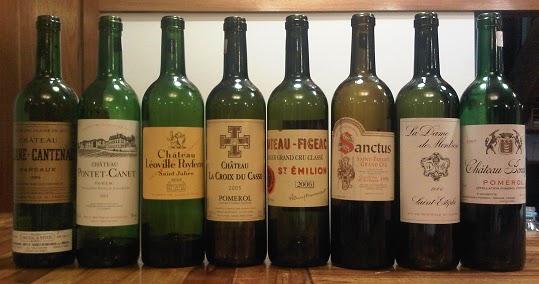
Na última 5ª feira, dia 16 de junho, realizamos mais uma degustação no Rosmarino, com a presença de 8 confrades, e 8 exemplares de Bordeaux, sendo 4 da margem direita e 4 da margem esquerda, o vinho mais novo era da safra 2006, e o mais antigo da de 1997. O menu estava ótimo, e como de costume foi escolhido pelo nosso confrade Paulo Sampaio.

Os vinhos harmonizaram muito bem com o menu escolhido..

Couvert: Pães especiais da casa, chèvre al huille, relish de pepino e manteiga

Entrada: Vol au vent de palmito

Primeiro prato: Fetuccine fresco com porcini

Prato principal: Magret de pato com amarenas e couscous marroquino com cogumelos

Sobremesas: Creme brulée ao limão siciliano, tarte tatin com sorvete de canela, torta de nozes e mel com sorvete de creme, sorvete de coco com baba de moça ou terrine de frutas frescas.

O ambiente, a comida e o serviço, como sempre, estavam excelentes..

Como mencionado acima, a degustação contou com oito vinhos, com níveis alcoólicos variando entre 12.5% e 13.5%.


A seguir uma breve descrição dos vinhos degustados:

Chateau Pontet-Canet 2001
Produtor: Ch. Pontet Canet
País/Região: França/Pauillac
Graduação alcoolica: 13%

Chateau Brane Cantenac 2004
Produtor: Henri Lurton
País/Região: França/Margaux
Graduação alcoolica: 13%

Chateau Leoville-Poyferre 2005
Produtor: Ch. Leoville Poyferre
País/Região: França/Saint Julien
Graduação alcoolica: 13.5%

Chateau La Croix du Casse 2005
Produtor: Ch. La Croix du Casse
País/Região: França/Pomerol
Graduação alcoolica: 13.5%

Chateau Figeac 2006
Produtor: Chateau Figeac
País/Região: França/Saint Emilion
Graduação alcoolica: 13.5%

Chateau Bonalgue 1997
Produtor: P. Bourotte
País/Região: França/Pomerol
Graduação alcoolica: 12.5%

La Dame de Montrose 2006
Produtor: Chateau Montrose
País/Região: França/Saint Estephe
Graduação alcoolica: 13%

Sanctus 1998
Produtor: Chateau Bienfaisance
País/Região: França/Saint Emilion
Graduação alcoolica: 12.5%

O vinho mais antigo foi o Chateau Bonalgue 1997, que infelizmente não estava bom para ser bebido, por estar turvo, com os aromas e sabores bastante prejudicados. O segundo mais velho, o Sanctus 1998, apresentou com uma cor rubi com bordas ligeiramente atijoladas e claros sinais de evolução. Alem destes, tivemos um vinho safra 2001, um outro safra 2004, dois da 2005 e dois da safra 2006.

Vinhos degustados


Em Bordeaux se produzem vinhos com uvas chamadas nativas, ou autóctones, sendo que as principais são: Cabernet Sauvignon, Merlot, Cabernet Franc para os vinhos tintos e Sauvignon Blanc, Sémillon e Muscadelle para os brancos. Entretanto, o que faz a excelência dos vinhos de Bordeaux, além da qualidade de suas uvas, são os cortes ou assemblages. O corte é feito para garantir harmonia, complexidade, equilíbrio e qualidade ao vinho: é a mistura de uvas provenientes de diferentes terrenos e também de uvas diferentes (Cabernet Sauvignon, Merlot e Cabernet Franc) em proporções estudadas. Este é o chamado corte bordalês: Merlot, Cabernet Sauvignon e Cabernet Franc (às vezes também Petit Verdot) em proporções combinadas com talento e arte pelo winemaker. *

A margem esquerda, o império da Cabernet Sauvignon, é onde se encontram terras fantásticas para o cultivo da Cabernet Sauvignon. É o império desta cepa, embora também Merlot e Cabernet Franc sejam ali plantadas. A margem direita, o império da Merlot, é onde se encontram Saint-Émilion com as vilas de Pomerol e Fronsac que produzem belíssimos vinhos à base de Merlot com Cabernet Franc. *

Degustamos vinhos das das margens esquerda e direita, sendo que os tres primeiros lugares ficaram com a margem esquerda.

Os resultados do painel se mostraram muito equilibrados, com uma dispersão de notas na média aparada de apenas 2,8 pontos (de 88,0 a 90,8). O vinho mais antigo, o Chateau Bonalgue 1997, não foi classificado por estar estragado. O vinho que ficou em sétimo lugar foi o mais jovem do painel, safra 2006, La Dame de Montrose, escolhido o pior vinho por 3 confrades e o segundo pior por outros dois.

O segundo melhor vinho do painel, foi o Chateau Pontet-Canet 2001, considerado o melhor vinho por tres confrades e o segundo melhor por outros dois.

O Campeão da noite, foi o Chateau Brane Cantenac, que ficou em primeiro lugar para tres confrades e em segundo para outros quatro. Este excelente vinho recebeu 90 pontos da Wine Advocate.


Vejam os resultados completos abaixo.


Não se esquecam que o nosso próximo encontro será no dia 21 de Julho, quando degustaremos Brunello di Montalcino com mais de 10 anos. Até lá....

* Fonte: ABC do Vinho, Silvia Franco

domingo, 5 de junho de 2011

Bordeaux Wine Region

Hundreds of books have been written on Bordeaux; its history (temporarily ruled by the English), its wines (the biggest wine region in the world), its terroirs (mainly alluvial soil made of stones and debris), its climate (hot but exposed to maritime weather which can create havoc at the time of harvest), and finally, its people (dynasties of négociants or aristocratic owners of the most famous chateaux.) So we will only briefly summarize that information here. Bordeaux consists of relatively plain topography: flat and mostly devoid of trees. Two long rivers, the Garonnne and Dordogne, split the region half and then join together into the Gironde River that flows into the Atlantic Ocean. Despite the plain character, this region consists of the exact elements that produce wines of finesse, subtly and ageing. The moderate climate from the Atlantic and rivers creates a warming effect, protecting Bordeaux from frost. The gravel soil drains water away from the vine roots, allowing the damp resistant Cabernet Sauvignon grape to fully mature. On a negative note, Bordeaux is subject to inconsistent vintages, some hot and dry, and some very wet and cool. To combat this inconsistency, Bordeaux blends together a variety of grapes that grow and mature at different stages. Therefore, a Bordeaux red may consist of Cabernet Sauvignon, Merlot and Cabernet Franc. A Bordeaux white is often the blend of Sauvignon Blanc and Semillon. These blends create well-balanced wines with good acidity, minerality and fruit.


With the basics out of the way, we can fulfill our main purpose: to try to make it easier for the American consumer to understand the main wine regions of Bordeaux, because unfortunately there are many, and, with 55 different appellations, it is difficult to know which ones you are likely to enjoy the most. We also would like to show you how much Bordeaux has changed over the last 20 years and point you towards even more changes to come from the largest wine region in the world.
One basic fact of the Bordeaux region compared to, say Burgundy, is that it is the land of blending. No Bordeaux red or white is made with one single grape; it is always a complex blend of at least two, more frequently three varietals for the reds as well as the whites (traditionally, Cabernet Sauvignon, Cabernet Franc and Merlot for reds and Sauvignon, Sémillon and Muscadelle for the whites). This fact alone put the Bordeaux region on a sort of pedestal 20 to 25 years ago when most of the new world producers were exclusively mono- varietal producers but since then, most have learned the art of blending. Another striking observation about the Bordeaux region is that vineyards exist everywhere on a 15-mile radius around the city of Bordeaux. If we were not in France, the whole area would simply be called "Bordeaux Wine," but the French, with their Cartesian mind, have recognized through the centuries distinctive qualitative nuances between each zone where grapes grow and came up with small territorial delineations (which they call "terroirs"), which they formalized in the first half of the 20th century by creating the various "Appellation Controlées." Although it may have looked neat on a map, this did not make the sale of wine easier, because as time went by, and after 55 different appellations were created, it became difficult for the consumer, and ever more so for the foreign consumer to figure out what is what.
3 sub-regions dominate and produce about 90% of all the top quality Bordeaux. They are:
  1. The "left bank" (Médoc – West of the Gironde)
  2. The Graves area
  3. The "right bank" (East of the Gironde)
The vast area between the two rivers that ultimately merge north of Bordeaux is called "Entre Deux Mers" and produces inexpensive whites that tend to constantly improve in quality.

LEFT BANK

Margaux
The Margaux appellation covers not only the commune of Margaux, but also those of Arsac, Cantenac, Labarde and Soussans. The vineyards cover gravelly ridges with a majority of Cabernet Sauvignon grapes. The wines are noted for their finesse and fragrance. Wines coming from the heavier soils in the lower-lying areas produce wines that are fuller and richer in body.
Moulis
Moulis and its neighbor Listrac lie farther back from the river on heavier soils. No classified chateaux here, but several very good Cru Bourgeois: the wines are powerful and rich, the best having finesse and fruit.
Saint Julien
Saint Julien has the highest proportion of Crus Classés (yet no 1st Growths). It is also the smallest top level appellation. Vineyards are situated on a gravel plateau by the river with a higher proportion of clay than Margaux. The wines have great character, with more vivid fruit and fleshiness than Margaux.
Pauillac
Pauillac lays claim to three of the Médoc's five first growths. Here, on the gravelly soils overlooking the Gironde estuary, Cabernet Sauvignon achieves greatness. Powerful and austere, great wines capable of aging for decades are made here. Given their high prices, we have not included a Pauillac in our sampling.
Saint Estephe
Saint Estephe lies on the boundary between the Haut Médoc and the Médoc to the north. The heavier soils are planted with more Merlot than the other appellations to the south. St-Estephe wines are deeply colored and have a distinctive style.
Haut-Medoc
The appellation of Haut-Médoc is a catch-all appellation. It covers everything that falls outside of the famous communes previously mentioned, from the appellation of Margaux going north about halfway up the peninsula to the appellation of St-Estephe. Style varies over this large area. Heavier, fuller wines are made farther north and lighter, softer wines made towards the south.
Médoc
The best, gravelly deposits are located further south. The soil and wines are generally inferior here. More Merlot is grown on the old clay deposits. Wines have less finesse and bouquet, but have good body and structure.

GRAVES

Located just south of the city of Bordeaux, Graves faces enormous pressure from urban sprawl. Once known mainly for its white wines, red wine vineyards have increased dramatically over the past 20 years and now production is almost equally divided. The soil, as the name would indicate, is gravelly. The red wines are less defined, softer, and earthier than those of the Médoc. The whites are clean, full and dry with lots of flavor.

RIGHT BANK

Saint Emilion
Wine was made in St-Emilion long before it was made on the left bank, in the Médoc. This is a region of smaller vineyards run by farmers, not of grand estates with their impressive chateaux. Soil types vary in this large appellation. Clay and limestone on the plateaux, gravel and windblown sands elsewhere. Merlot dominates here, giving these wines a characteristic warm fruitiness. With the new garage wines, St-Emilion is now one of the most exciting AOCs.
Pomerol
The smallest appellation of the Right Bank. Soils vary, but are marked by a layer of heavy clay containing nuggets of iron. As in St-Emilion, Merlot dominates here. Wines are dense and voluptuous with rich fruit.
Lussac Saint Emilion
The northernmost of the "satellite appellations," which are not part of the St-Emilion AOC, but are permitted to add it to their name. Located on a limestone plateau. Good value for money here, the best easily surpass some St-Emilion grown on the plain. Wines have good fruit, but are slightly more rustic than St-Emilion.
Lalande de Pomerol
Located across the little river Barbane from Pomerol. Soils are low lying sand and gravel terraces. Wines are concentrated and fruity, comparable to lesser Pomerols and represent great bargains.
Fronsac
Fronsac wines were once more reputed than those of St-Emilion. Fronsac overlooks the Dordogne River just west of Libourne. Vineyards are on a limestone plateau covered in red soil. Merlot and Cabernet Franc are the dominant grape varieties with a lot of Malbec still grown here. Wines are supple and dense, not as lush as Pomerol.
Cotes de Castillon
Cotes de Castillon lies just to the east of St. Émilion. It is named after the village Castillon-la-Bataille where the remnants of the English army were defeated in 1453, thus ending the Hundred Year’s War and integrating their Bordeaux domaines into the Crown of France. In the past decade, the area has become known for producing fantastic wines like Stephan von Neipperg’s Chateau d’Aighuile.
Source: www.alba-vineyard.com